How To Reply To YouTube Comments In A Language You Do Not Speak
The thing that stops most new creators from building for an English-speaking audience is not editing. It is not thumbnails either. It is the comment box.
I hear the same three worries over and over: what if someone writes to me in English and I misunderstand it? What if they ask something I cannot answer? How am I supposed to build a community in a language I only half speak? People stop right at the door, over a problem that has a fairly boring solution.
I have been making YouTube content since 2017, and the channels I build now are faceless ones aimed at viewers in the US, the UK, Germany and Japan. I do not speak all of those languages. I still answer comments in all of them. Here is the workflow I actually use, and – more importantly – the two places where using a tool for this crosses a line you do not want to cross.
Why the comment section is worth your time at all
Most people watch three numbers: views, subscribers, watch time. Comments sit outside that dashboard, so they get treated as optional.
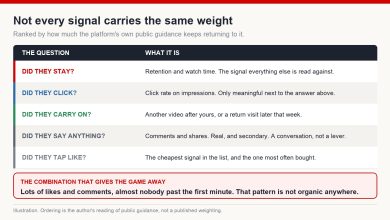
They are not, for two reasons. The first is the one everyone talks about: a video that people argue about, ask questions under and come back to is a video that holds attention, and holding attention is what the recommendation system is built to notice. I want to be careful here, because you will read confident claims about exactly how much comments move distribution and none of them are verifiable from outside YouTube. What I can say from my own channels is narrower and more useful: the videos with real conversation underneath are the ones that keep collecting views weeks later.
The second reason is the one I would defend even if comments counted for nothing. Your comment section is the cheapest audience research you will ever get. People tell you, in their own words, what they did not understand, what they tried, and what they want next. That is a content calendar being written for you by the people who will watch it.
The four-step loop
The workflow is simple enough that it fits on one line: copy, understand, draft, edit. The last step is the one that matters.
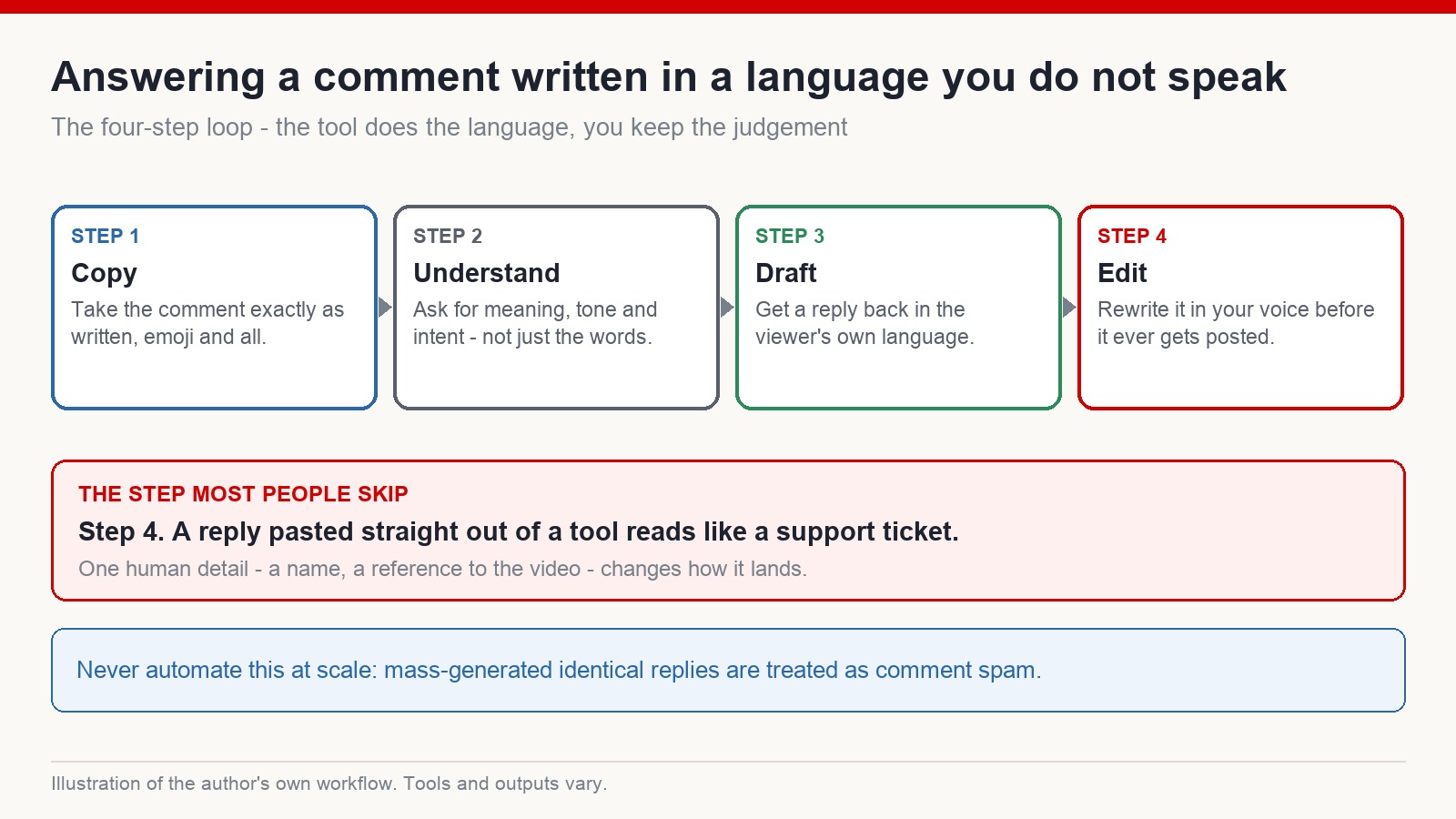
Copy the comment exactly as written. Emoji, typos, slang, all of it. The mess is information. A comment written in shouty caps with three fire emoji is not the same comment as the identical words typed politely, and a tool cannot tell you that if you have already tidied it up.
Ask for meaning, not just words. This is where most people stop too early. Do not ask only “translate this.” Ask what the person actually wants, what tone they are using, and whether there is a question buried in it. Language detection is automatic in any modern tool, so you do not need to know what you are looking at before you paste it in.
Draft a reply in their language. If somebody writes to you in Spanish, answering in Spanish changes how the channel feels to them. This costs you nothing now, and ten years ago it would have cost you a freelancer.
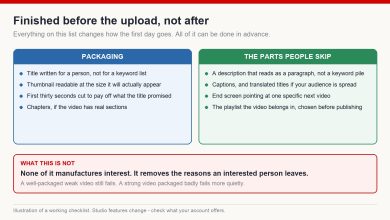
Rewrite it before it goes anywhere near the post button. A reply pasted straight out of a tool reads like a support ticket. It is correct, it is polite, it is completely dead. Add one human detail – their name, a callback to the exact part of the video they mentioned, an admission that you got something wrong – and the same reply lands entirely differently.
What a literal translation leaves out
The reason step two exists is that a word-for-word translation gives you the dictionary and nothing else. It hands you idioms turned into nonsense, a guess at names, and no clue whether the person is joking, complaining or being sarcastic. Answer a joke as though it were a complaint and you look like a bot.
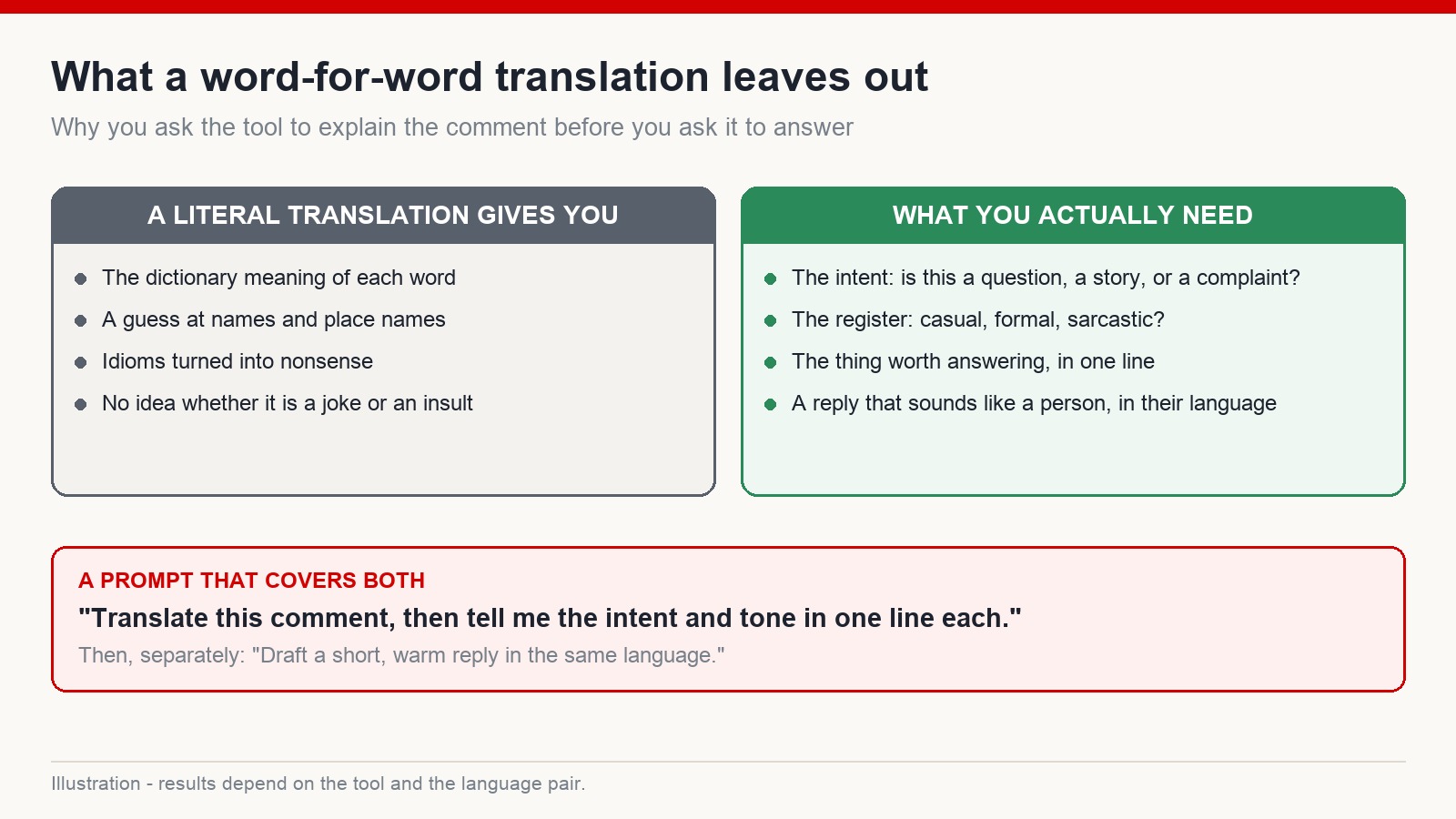
The prompt I use is two moves rather than one. First: “Translate this comment, then tell me the intent and the tone in one line each.” Read that before you go any further. Only then: “Draft a short, warm reply in the same language.” Splitting it in two takes about fifteen extra seconds and stops you answering a question nobody asked.
Not every comment deserves the same answer
Once a video starts moving, you cannot reply to everything, and trying to will make every reply worse. Triage first.
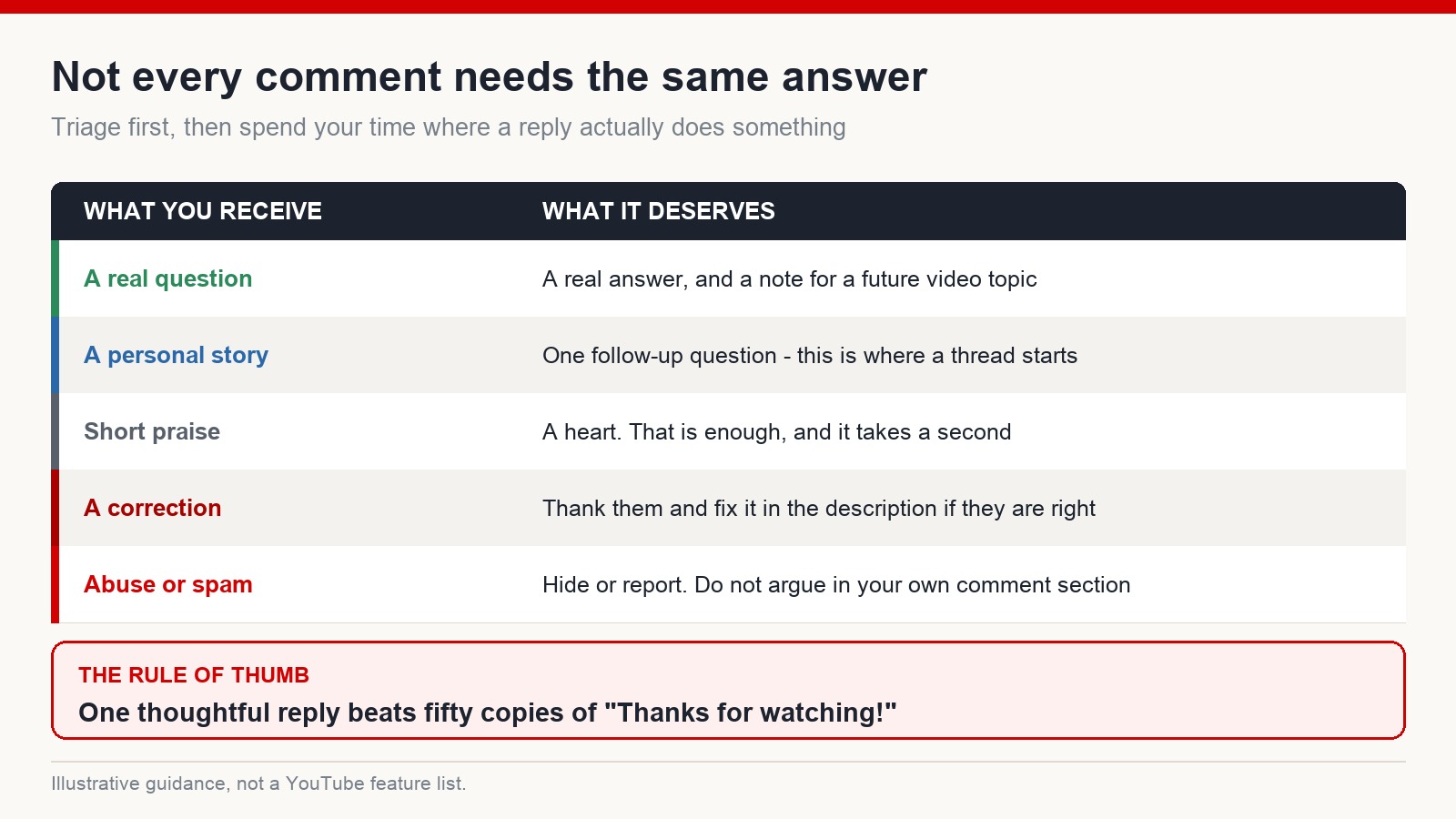
A real question gets a real answer, and it also gets written down, because a question asked once in public has usually been asked silently by a few hundred people who did not type it. A personal story gets one follow-up question – that is where threads start, and threads are worth more than isolated replies. Short praise gets a heart, which takes a second and is genuinely enough. A correction gets a thank you and, if they are right, a fix in the description. Abuse and spam get hidden or reported; never argue in your own comment section.
The two lines you do not cross
This is the part of the topic that gets skipped, and it is the part that ends channels.
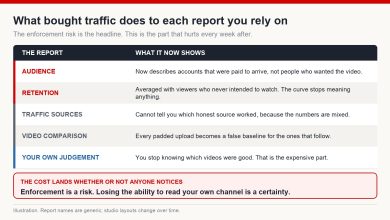
Do not mass-generate replies. Posting dozens of near-identical comments, especially with links in them, is exactly the pattern spam filtering is built to catch. It does not matter that a human pressed the button each time. Under YouTube’s spam and deceptive practices policy, repetitive content posted at scale in comments is spam, and the consequences run from comments being removed to the channel being terminated.
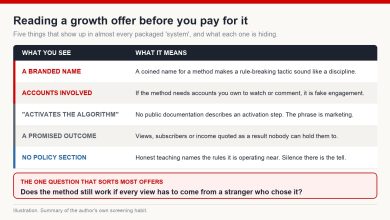
Do not write comments from accounts you control. Priming your own comment section from a second account – or a dozen of them, on separate emails, in separate browser profiles – is fake engagement. Isolation does not change the category. If the account is not a real person choosing to say something, the rule is the same one, and the tidiness of the setup is irrelevant to it.
Neither of these is a grey area. Both are written down publicly, and both are cheap to avoid: reply as yourself, from your own channel account, to comments other people actually left.
Where this goes wrong even when nobody breaks a rule
Replies that sound machine-made. If your last thirty replies all open with “Thank you so much for watching!”, readers notice, and it makes the channel feel automated even when it is not. Vary the opening. Answer the specific thing.
Batch-answering. Handling forty comments in one sitting with the same phrasing produces forty identical replies, which is the pattern above, arrived at by accident.
Ignoring the best comments. The long, thoughtful ones take the most effort to answer, so they get skipped in favour of easy ones. That is backwards. The person who wrote four paragraphs about their own attempt is the closest thing you have to a subscriber for life.
What the tool cannot do for you
A translation tool removes the language barrier. It does not know your channel, it does not remember the person who commented on the last three videos, and it cannot decide what is worth saying. Treat it as an assistant with excellent vocabulary and no judgement, and the arrangement works. Hand it the judgement as well and your comment section becomes a help desk.
Can I really answer foreign-language comments without speaking the language?
Yes, for the ordinary run of comments. What you cannot outsource is the decision about what to say, and you should still read the draft before posting it – if a reply confuses you, it will confuse them.
Do tools detect the language automatically?
Modern ones do. You do not need to identify the language before pasting it in.
Does replying to comments increase how much YouTube recommends a video?
Real conversation under a video is a genuine engagement signal, but nobody outside YouTube can tell you how heavily it weighs. Rather than chasing a benchmark, compare a video against the median of your own last ten uploads – that comparison is the only one that means anything on your channel.
Should I reply to every comment?
No. Prioritise questions, stories and corrections. A heart on the rest is a complete answer.
Is it acceptable to use a tool to reply in a language I do not speak?
Yes. Using a translation tool is not against any policy. Posting identical replies at volume, or writing comments from accounts you own, is – and that is a different activity entirely.
One last thing
Stop treating the comment section as a chore attached to the end of publishing. It is the only place your audience talks back. A reply that lands at the right moment can be worth more to a channel than a few thousand extra impressions, because impressions do not come back next week to see whether you answered.
If you are building a faceless channel for an English-speaking audience and want the rest of the process laid out in order, that is what we work through at mmoyoutube.com.